Bernajoux
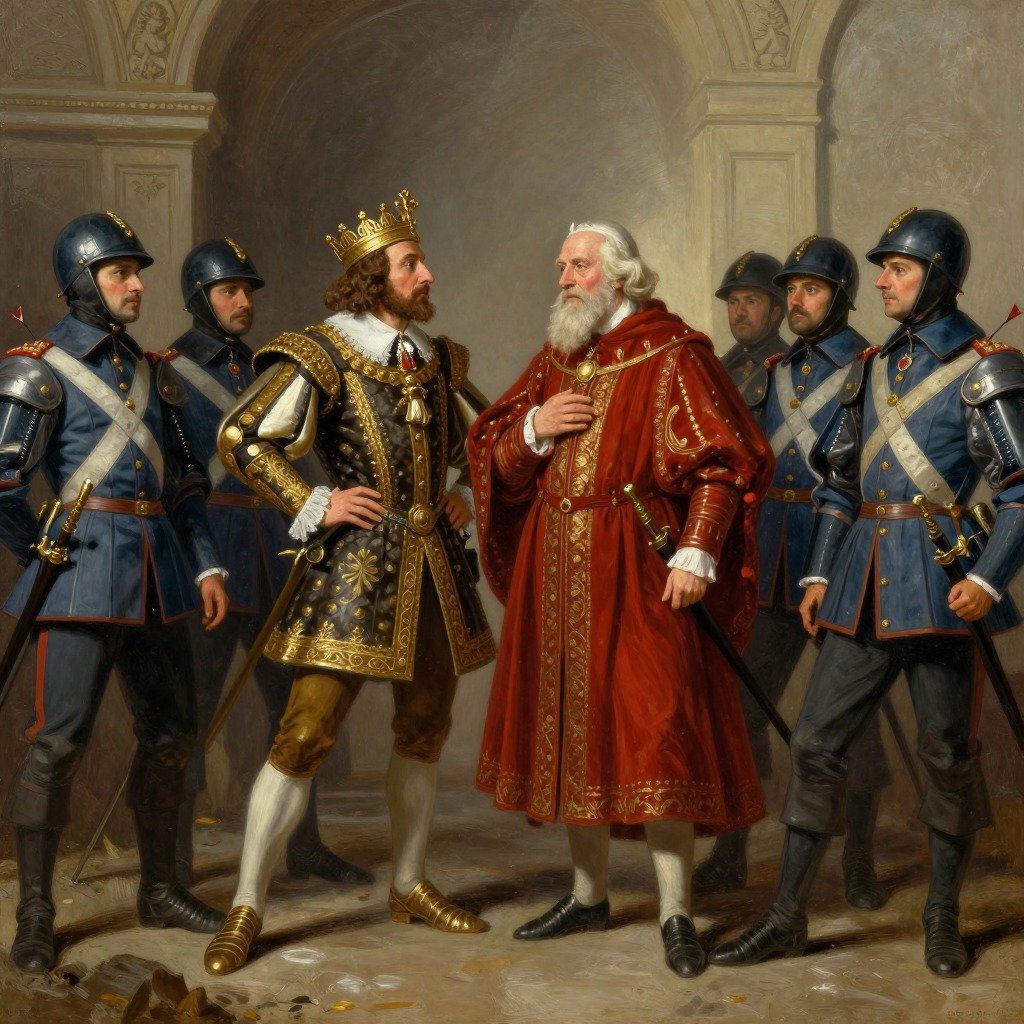
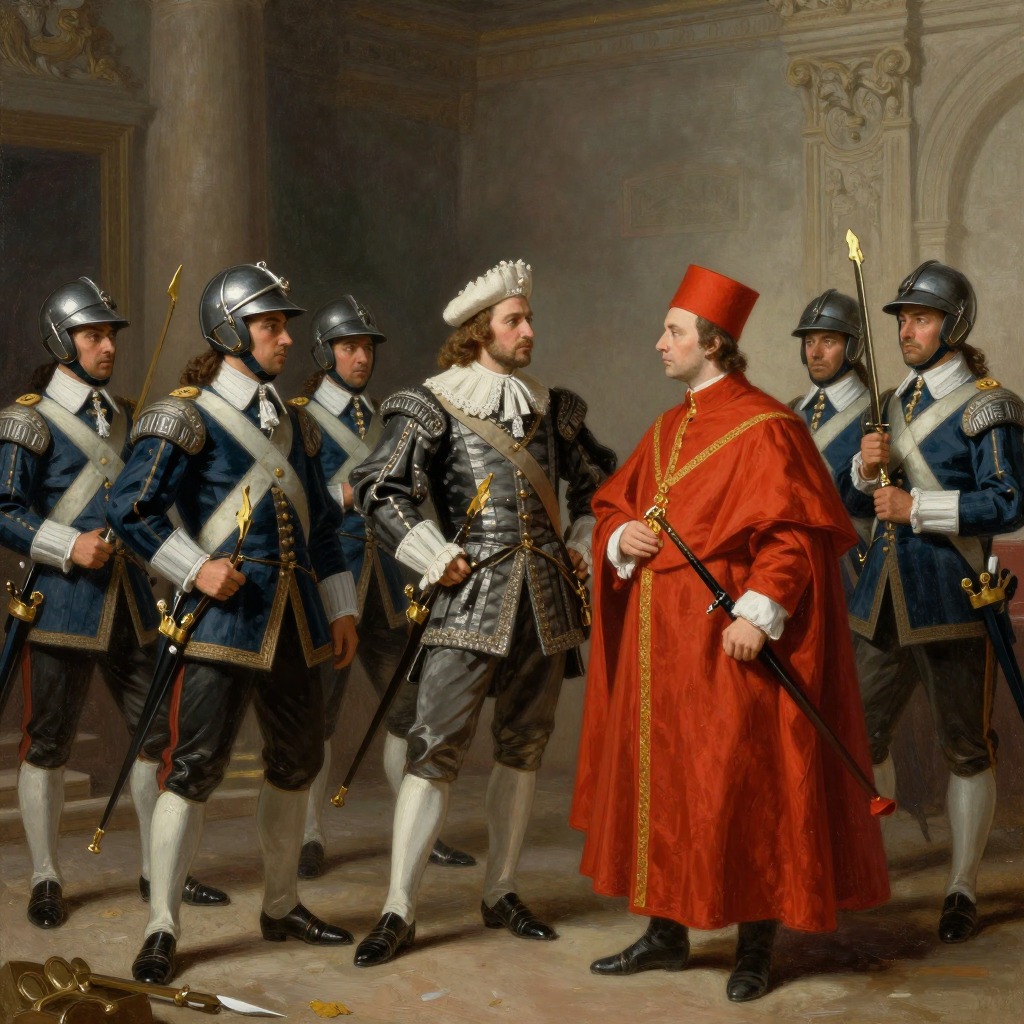
Bernajoux, a Guardsman in the service of Cardinal Richelieu, enters the story as a figure whose provocations and defeats serve to sharpen the conflict between the Cardinal's Guards and the King's Musketeers, and to display the courage and growing reputation of d'Artagnan. Though he appears only in a few episodes, his actions have consequences that ripple through the camp and the court, marking him as a memorable if secondary antagonist.
Identity and Role
Bernajoux is a soldier of the Cardinal's Guards, a corps that rivals the King's Musketeers under Monsieur de Treville. He is first encountered in a tennis court near the Luxembourg stables, where he makes an insolent remark about d'Artagnan, whom he calls a "Musketeer apprentice" after the young Guardsman ducks to avoid a ball. This taunt, delivered with a twist of his mustache, immediately provokes a challenge. Bernajoux is described as a man whose name "was known to all the world" for figuring frequently in the daily brawls that the cardinal's edicts could not suppress, marking him as a seasoned and aggressive participant in the ongoing street warfare between the two corps.
The Duel with d'Artagnan
When d'Artagnan challenges him, Bernajoux initially suggests a more secluded location for their duel, such as behind the Abbey St. Germain or in the Pre-aux-Clercs, but d'Artagnan, pressed for time due to his audience with the king, insists on fighting immediately in the empty street. Bernajoux, hoping to intimidate his younger opponent, draws his sword and springs forward. The fight is brief but decisive. D'Artagnan, fresh from his victory over Jussac and full of confidence, parries Bernajoux's initial thrust, frees his weapon, and touches his adversary on the shoulder. Bernajoux, refusing to acknowledge the wound, rushes blindly forward and impales himself on d'Artagnan's sword. Though he does not fall or declare himself conquered, he retreats toward the hotel of M. de la Tremouille, where a relative serves. D'Artagnan, unaware of the seriousness of the injury, presses him, but the noise of the fight draws two of Bernajoux's friends from the tennis court, who attack d'Artagnan. Athos, Porthos, and Aramis quickly join the fray, and the brawl escalates into a full-scale melee involving the Musketeers, the Cardinal's Guards, and the servants of M. de la Tremouille. Bernajoux, now seriously wounded, is carried inside the hotel.
Aftermath and Consequences
The wounding of Bernajoux becomes a major incident that is reported to the king and the cardinal. King Louis XIII, when informed by Monsieur de Treville of the affair, mentions that the cardinal has complained that Bernajoux was "maltreated" and that the Musketeers had "laid siege to the hotel of the Duc de la Tremouille." The king himself later asks d'Artagnan, with a mixture of admiration and reproach, whether it was he who gave "those two equally fine thrusts at Bernajoux." The cardinal, furious over the loss of seven of his Guardsmen in two days, absents himself from the king's gaming table for eight days. The king, in turn, taunts the cardinal by asking, in the kindest tone, "Well, Monsieur Cardinal, how fares it with that poor Jussac and that poor Bernajoux of yours?" Bernajoux's injury thus becomes a pawn in the larger political game between the king and his minister.
The Interrogation and Revelation
Bernajoux's role extends beyond the duel itself. When Monsieur de Treville and the Duc de la Tremouille visit the wounded man to ascertain the truth of the affair, Bernajoux, placed between life and death, describes the events exactly as they had passed, without concealing anything. His truthful testimony clears the Musketeers of blame and forces the Duc de la Tremouille to offer his apologies to Treville. This moment of honesty, born of his critical condition, is a rare instance of the character acting without guile, and it directly contributes to the resolution of the conflict between the two noblemen. Later, when d'Artagnan is presented to the king, Athos mentions that d'Artagnan had rescued him from the hands of Cahusac, and the king, recalling the earlier affair, asks if it was d'Artagnan who wounded Bernajoux. D'Artagnan's exploits against Bernajoux, along with his victory over Jussac, are thus woven into the narrative of his rising favor at court.
Narrative Significance
Bernajoux serves as a catalyst for several key developments. His duel with d'Artagnan demonstrates the young Gascon's growing skill and courage, and it precipitates a larger brawl that further cements the bond between d'Artagnan and the three Musketeers. The incident also provides the king with a pretext to mock the cardinal and to reward d'Artagnan, and it forces the Duc de la Tremouille to acknowledge the Musketeers' version of events. Though Bernajoux himself fades from the story after his wounding, his name remains a reference point for d'Artagnan's early exploits and for the ongoing rivalry between the king's and the cardinal's men.